
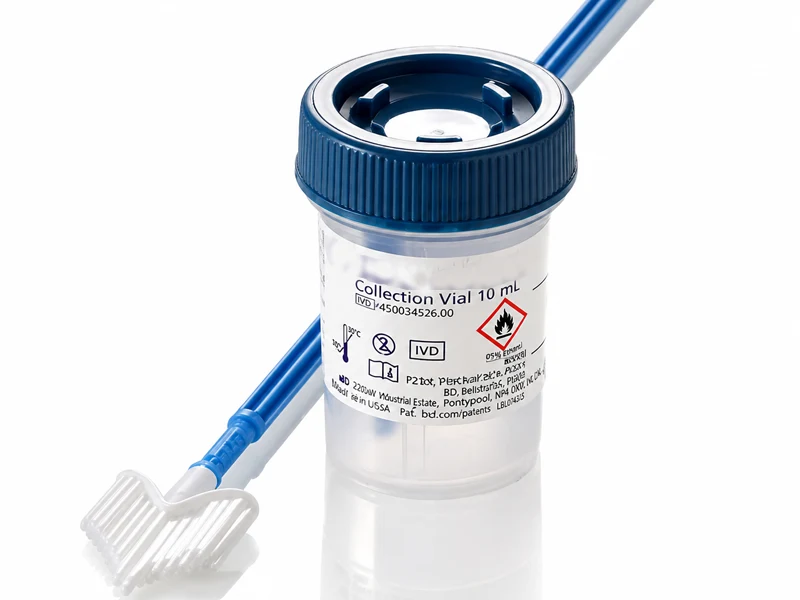
LBC technology extends well beyond cervical cancer screening — with proven applications in sputum, urine, pleural and peritoneal effusion cytology that significantly improve lesion detection rates over conventional direct smear methods, opening a substantially expanded market opportunity for liquid-based cytology platforms.
When liquid-based cytology was introduced into clinical practice in the 1990s, its primary application was cervical cancer screening. However, the fundamental technological advantages of LBC — superior cell preservation, reduction of obscuring material, uniform cellular monolayer presentation and compatibility with ancillary molecular testing — apply equally to virtually any cytological specimen type. The non-gynaecological LBC market has grown steadily as clinical evidence has accumulated and laboratory practitioners have recognised the diagnostic improvements achievable beyond the cervix.
Respiratory Cytology: Sputum and Bronchial Specimens
Respiratory cytology plays a central role in the diagnosis and staging of lung cancer, which remains the leading cause of cancer mortality globally. Conventional direct smear preparation of sputum, bronchial brushing and bronchoalveolar lavage specimens is frequently hampered by mucus, blood, inflammatory debris and air-drying artefacts that obscure cellular morphology.
LBC processing of respiratory specimens addresses these limitations directly. Published studies comparing LBC to conventional smear preparation for respiratory specimens have consistently demonstrated:
- Reduced background obscuring material, improving cellular visibility and diagnostic confidence
- Superior preservation of cellular detail, particularly for specimens with delayed transit times
- Improved adequacy rates, reducing the frequency of non-diagnostic results requiring repeat bronchoscopy
- Residual material available in the LBC vial for ancillary molecular testing — EGFR mutation analysis, ALK/ROS1 rearrangement detection and PD-L1 expression assessment — without the need for a second bronchoscopic procedure
Urinary Cytology
Urine cytology is a widely used, non-invasive tool for the detection and surveillance of urothelial carcinoma. The Paris System for Reporting Urinary Cytology — the international standardised reporting framework — explicitly acknowledges LBC as the preferred preparation method for urine specimens, citing superior cellular preservation and reduced background.
Key advantages of LBC for urinary specimens include:
- Significant reduction in background precipitation and obscuring inflammatory cells
- Improved cytomorphological preservation, enabling more confident high-grade urothelial carcinoma (HGUC) diagnosis
- Increased detection of low-grade urothelial lesions through improved cellular monolayer presentation
- Compatibility with FISH (fluorescence in situ hybridisation) analysis for chromosomal abnormality detection using residual LBC material
Effusion Cytology: Pleural, Peritoneal and Pericardial Specimens
Cytological examination of serous effusions is a critical diagnostic step in the staging and management of malignancies involving the pleural, peritoneal and pericardial cavities. Effusion specimens are characteristically high-volume, protein-rich fluids that are prone to cellular clumping, background fibrin deposition and rapid cellular degeneration if processing is delayed.
“LBC preparation of effusion specimens consistently yields better-preserved cellular monolayers with reduced background interference — leading to more accurate diagnosis of malignant mesothelioma, adenocarcinoma and lymphoma in effusion cytology.”
LBC processing of effusion specimens has been shown to improve the detection of malignant cells, particularly for mesothelioma and adenocarcinoma, which characteristically present in small cell clusters that may be obscured in conventional smear preparations.
Thyroid and Fine Needle Aspiration Cytology
Fine needle aspiration (FNA) cytology is the first-line investigation for thyroid nodules and other superficial masses. LBC preparation of FNA material offers several advantages over conventional direct smear technique, including more uniform cellular distribution, elimination of air-drying artefact and preservation of residual material for immunocytochemistry and molecular analysis.
The Bethesda System for Reporting Thyroid Cytopathology — the internationally adopted classification framework — is fully applicable to LBC-prepared thyroid FNA specimens, facilitating consistent communication between cytopathologists and clinical teams.
Implications for Laboratory Procurement
For diagnostic laboratories and pathology departments evaluating LBC platform procurement, the non-gynaecological application potential represents a significant added value consideration. A single LBC platform — such as the PrepStain™ Slide Processor used with SurePath™ — can serve as the preparatory instrument for multiple cytology specimen types across different clinical departments, delivering economies of scale in reagent consumption, staff training and quality management.
Hong Kong Origins Investment Limited supports diagnostic laboratories in assessing the full clinical and operational value of LBC platform adoption. For enquiries regarding LBC systems and their application across your laboratory’s specimen types, please contact our team.